Future-Proofing Commercial Security: How AS-9000 Intrusion Alarm Panels Deliver Scalable, Integrated Protection for Multi-Site Enterprises

In today’s rapidly evolving threat landscape, commercial enterprises face increasingly sophisticated intrusion risks. From coordinated attempts to breach banking networks to unauthorized entry in sprawling industrial campuses, organizations must deploy intrusion detection systems that are not only effective today but adaptable for tomorrow’s security challenges. Traditional alarm panels with limited zones and single-mode communications no longer suffice for enterprises requiring centralized, reliable protection across multiple sites.
This article positions the AS-9000 intrusion alarm panels as a future-proof cornerstone of modern commercial security — engineered for scalability, seamless integration, and robust communication. Leveraging features such as industrial-grade construction, expandable wired and wireless zone support, and multi-channel connectivity, the AS-9000 stands out among the best intrusion alarm panels for business environments. Whether you’re evaluating commercial grade intrusion panels for global deployments or seeking cost-effective, high-performance systems for banks, factories, or retail chains, this deep dive helps inform your procurement strategy.
The Evolving Commercial Security Landscape
Rising Threat Complexity in Multi-Site Operations
Enterprises today operate across cities, states, and continents — often managing dozens or hundreds of physical locations. With this scale comes elevated risk: unauthorized access, vandalism, internal theft, and sophisticated intrusion attempts can occur concurrently at different sites. Traditional alarm systems, designed for small spaces or standalone buildings, lack the architecture required for enterprise-wide visibility and coordinated response, leaving organizations vulnerable to operational disruption and financial loss.
Effective enterprise security demands systems that go beyond isolated alerts to provide synchronized monitoring, data logging, and centralized management. This is where modern intrusion panels operate as intelligent nodes within a broader security ecosystem.
The Role of Intrusion Panels in Commercial Security Architecture
An intrusion alarm panel is not merely a device that triggers a siren. In mission-critical environments — from banking centers to industrial parks — it functions as the security command center: collecting detector signals, executing logic for alarm validation, communicating events across networks, and interfacing with remote monitoring platforms. For enterprise security, panels must scale effortlessly, support hybrid wired/wireless infrastructure, and deliver real-time alerts across diverse communication channels.
The AS-9000 family embraces these demands by offering expansive zone capacity and redundant communication — qualities that define modern industrial-grade intrusion alarm panels for enterprise security.
Why Future-Proofing Matters for Enterprises
Security investment decisions today need to account for tomorrow’s expansion and threat vectors. A panel with fixed, limited capability might function initially but become obsolete as operations grow toward multi-site deployments. Future-proof systems must incorporate adaptability at their core — supporting modular expansion, multi-channel transmission, user access granularity, and integration interfaces with other security layers.
For enterprise stakeholders aiming to optimize ROI while maintaining high assurance, selecting platforms like the AS-9000 that anticipate these needs is pivotal.
AS-9000 Intrusion Alarm Panels: Core Features for Scalable Commercial Security
Modular, Scalable Zone Architecture
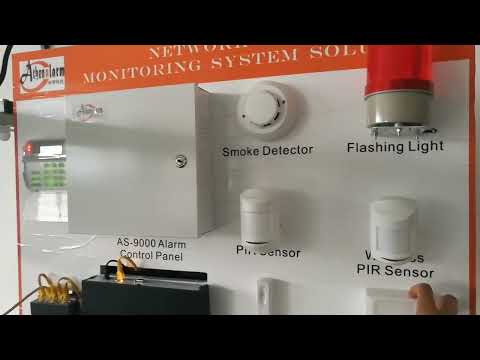
At the heart of the AS-9000 design is its modular scalability. Each base panel supports 16 wired zones and 30 wireless zones — a significantly larger footprint than typical small-business alarm systems. More importantly, using additional address modules, the system can expand up to 1,656 bus-type zones, making it suitable for high-density coverage in industrial parks, corporate campuses, or large commercial complexes.
This scalability means procurement teams can deploy an initial configuration tailored to immediate needs and expand organically as facilities grow — without replacing core hardware. Such flexibility positions AS-9000 among the best intrusion alarm panels for business focused on long-term operational resilience.
Intelligent Control and Operational Ease
The AS-9000 panel offers an advanced LCD keypad with intuitive voice prompts and multi-language support, creating a user-friendly interface for both setup and daily operations. Users can arm, disarm, or query system status via keypad, SMS, remote control, or integrated software. Multi-user access accommodates up to 11 distinct user passwords, enabling role-based control — vital for enterprise environments with layered security responsibilities.
For global deployment teams managing multi-site security, this operational versatility reduces training overhead and minimizes configuration errors, improving overall system reliability.
Robust Processing and Resilience
Commercial security systems must perform consistently, even under duress. The AS-9000’s 32-bit ARM microprocessor ensures rapid signal processing and reliable event detection without lag — a critical factor when every second counts in intrusion detection. Built-in protections such as automatic short-circuit and overload prevention, tamper alerts, and backup power further enhance resilience for uninterrupted commercial security operations.
Combined with resilience in harsh environmental conditions (wide operating temperature and humidity ranges), the AS-9000 supports diverse geographic deployment scenarios.
Multi-Channel Communication for Real-Time Alerting
Communication Flexibility Across PSTN, 4G, and TCP/IP
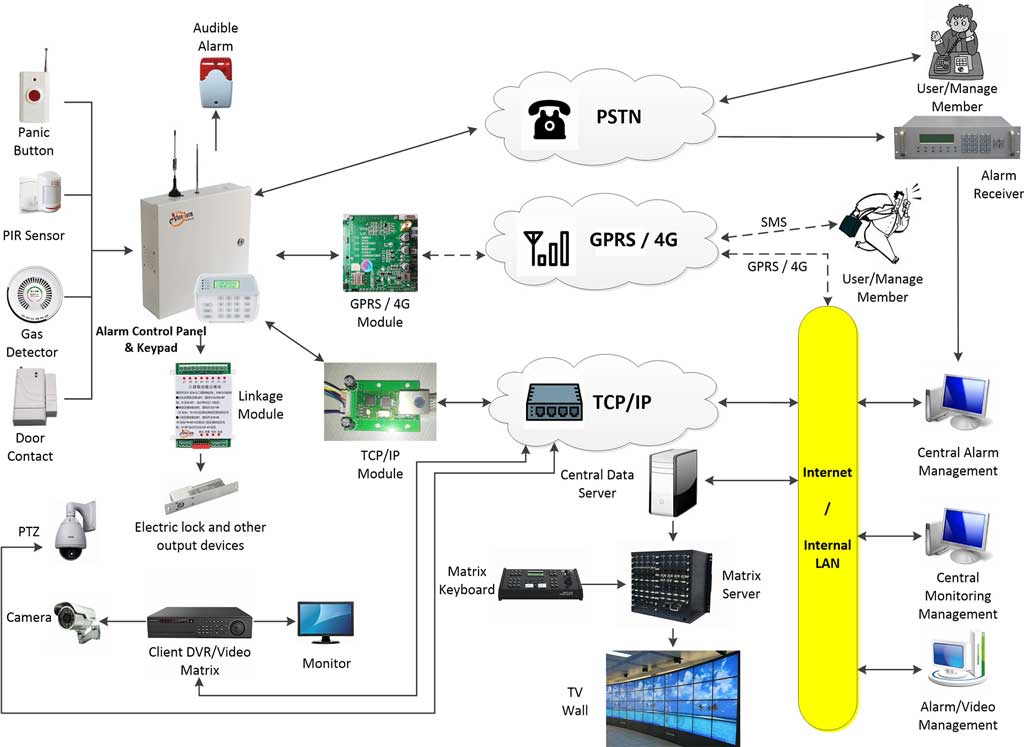
A major differentiator for enterprise-grade panels lies in their communication versatility. The AS-9000 supports multiple transmission methods:
-
PSTN (landline): Traditional, reliable communication where TCP/IP connectivity may be unavailable.
-
4G (LTE): Cellular connectivity ensures alarm events are transmitted even when landlines fail — ideal for remote sites or facilities with unstable wired networks.
-
TCP/IP (Ethernet): Network-based transmission enables integration with centralized monitoring platforms and faster event propagation.
This multi-channel approach guarantees that alarm signals reach monitoring centers or responsible personnel regardless of network conditions — a hallmark of integrated commercial intrusion alarm systems with 4G/TCP-IP.

Geographic Deployment Considerations
For global enterprises, choosing the right communication module is not a one-size-fits-all decision. Urban centers with robust wired infrastructure may prioritize TCP/IP connectivity, while rural or satellite facilities benefit more from 4G redundancy. Forward-thinking procurement teams often deploy a mix of modules to optimize uptime and compliance across their entire footprint, ensuring consistent alarm transmission under diverse conditions.
Alerting and Event Logging for Operational Insight
Beyond instant alarms, event logging and historical analysis are essential for compliance and forensic investigation. The AS-9000 can store up to 1,500 events in its onboard memory, acting like a “black box” for security operations. With cloud-based logging support, security teams can review alarm history, validate responses, and identify patterns — features particularly critical for enterprise environments with audit requirements or regulatory obligations.
Integration: Creating a Unified Security Ecosystem
Seamless Compatibility With Complementary Systems
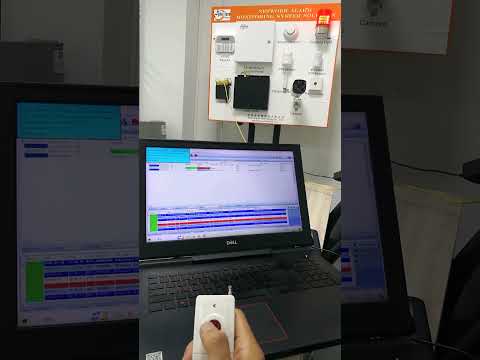
While an intrusion panel detects unauthorized entry, larger security ecosystems demand interoperability with other components: CCTV, access control, perimeter sensors, and network alarm monitoring solutions. The AS-9000 is designed to integrate with Athenalarm’s AS-ALARM network alarm center management software, enabling centralized visibility, automated CCTV triggers, and remote diagnostics.
This unified approach is critical for enterprises that require enterprise intrusion alarm panels for network monitoring integration — facilitating synchronized alarm verification and simplified security workflows.
Cost-Efficiency Through Reduced Complexity
Integrating panels into a cohesive system reduces the total cost of ownership by eliminating siloed components, preventing redundant infrastructure, and minimizing false positives through intelligent cross-verification. For procurement professionals, this translates into measurable cost savings over the lifecycle of the security deployment.
Real-World Deployment Scenarios
In banking networks, industrial facilities, or educational campuses, the ability to manage thousands of zones with centralized logging and remote response capability helps standardize security protocols across multiple sites — elevating security posture while simplifying management.
Solving Multi-Site Enterprise Challenges
Standardization Across Distributed Sites
Multi-site enterprises often face fragmented security deployments due to disparate systems and vendor solutions. The AS-9000’s modular expansion and centralized communication framework enable a standard security architecture across all sites — making training, maintenance, and policy enforcement more consistent and efficient.
Central Monitoring and Compliance
Through integration with network alarm monitoring systems and cloud logging, the AS-9000 supports enterprise requirements for centralized monitoring and compliance reporting. This capability is particularly beneficial for regulated industries where audit trails and coordinated responses are mandatory.
Long-Term Lifecycle Planning
Scalability, redundancy, and user management features ensure that expansion from small installations to large multi-site deployments is handled without costly hardware replacements. For organizations planning phased security upgrades, this translates into lower lifecycle costs and higher system uptime.
Procurement Insights for Commercial Intrusion Panels
Evaluating Total Cost of Ownership
When assessing commercial panels, procurement teams should consider not just purchase price but integration potential, expansion capabilities, communication redundancy, and support for enterprise workflows. The AS-9000’s scalable architecture and multi-channel communications reduce long-term operational costs and simplify upgrades.
Best Practices for Selection
Security buyers should match panel configurations to deployment environments — for instance, prioritizing 4G modules for remote sites and TCP/IP for centralized campuses. Ensure compatibility with existing sensors and monitoring software, and verify certifications (such as CCC and IEC 62368-1) to meet international standards.
Procurement Framework for Bulk Deployment
Develop a procurement decision matrix that evaluates panel features, communication options, integration capabilities, scalability potential, and service support. For customized enterprise solutions, engage with the manufacturer early to tailor firmware, manuals, and configurations to your operational needs. Download the AS-9000 Intrusion Alarm Panel User Manual for more details.
Conclusion
In an era where commercial enterprises cannot afford security gaps, selecting intrusion panels that offer scalability, integration, and resilience is vital. The AS-9000 intrusion alarm panel exemplifies such a solution — delivering modular design, multi-channel communications, and integration capabilities required for future-proof enterprise security.
By aligning procurement strategies with operational goals and emerging security trends, organizations can protect assets, streamline monitoring, and maintain compliance across diverse deployment environments. Explore detailed specifications and procurement options on Athenalarm’s official site and contact their team to position your enterprise with a security platform designed for the challenges of tomorrow.
The AS-9000 series provides robust, scalable security solutions for businesses, with features verified from official sources. It supports multi-site operations effectively, though implementation may vary based on specific needs.
Key Points:
- Scalability: Expandable to 1,656 zones, ideal for growing enterprises.
- Communication: Versatile options including PSTN, 4G, and TCP/IP ensure reliability.
- Integration: Seamless with other security systems, reducing costs.
- Research suggests that such integrated systems enhance overall security posture, though experts recommend professional assessment for deployment.
For more on selection, see best practices.
In the dynamic field of commercial security, where threats evolve rapidly, the AS-9000 series from Athenalarm stands out as a versatile and future-proof option for multi-site enterprises. This comprehensive overview builds on the core article, incorporating verified specifications, media enhancements, and additional insights to provide a thorough understanding.
Enhanced Introduction
Today’s threat landscape demands advanced intrusion detection. The AS-9000, with its industrial-grade build, addresses these needs effectively..
Detailed Evolving Landscape
Threat Complexity
Multi-site risks require synchronized systems. Traditional setups fall short, as noted in industry analyses.
Role of Panels
Panels like AS-9000 act as command centers, supporting hybrid infrastructures.
Future-Proofing
Adaptability is key for ROI, with modular designs preventing obsolescence.
Core Features Expanded
Zone Architecture
16 wired + 30 wireless, expandable to 1,656. This allows organic growth without hardware overhauls.

Control Ease
LCD keypad, voice prompts, multi-language. Up to 11 users for role-based access.
Processing Resilience
32-bit ARM, protections against shorts, overloads, tampers. Operating range: -10°C to 55°C, 40-70% humidity.
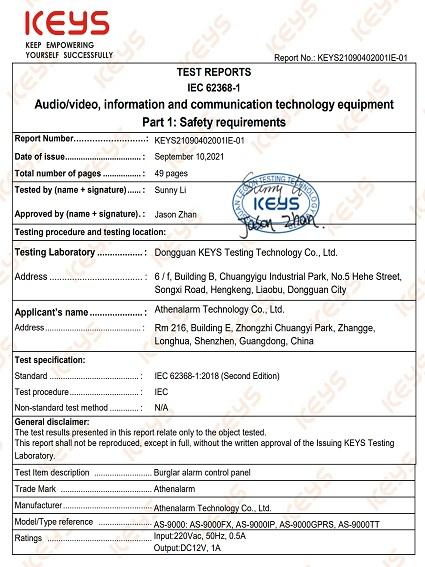
Certifications include CCC and IEC 62368-1, ensuring compliance.
Communication Details
Flexibility
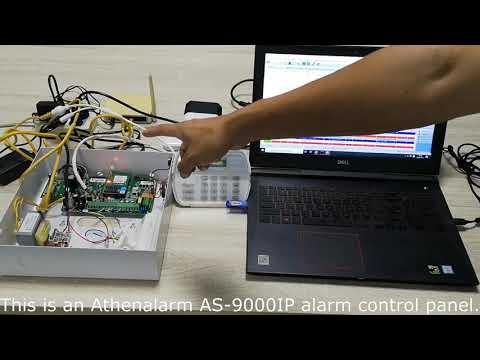
PSTN, 4G (LTE bands specified), TCP/IP. Models: AS-9000FX (PSTN), AS-9000GPRS-4G (PSTN & 4G), AS-9000IP (PSTN & TCP/IP), AS-9000FF (PSTN & 4G & TCP/IP).
Deployment
Mix modules for optimal coverage.
Logging
1,500 events, cloud support for audits.

Integration Insights
Compatibility
With AS-ALARM software, CCTV, access control.
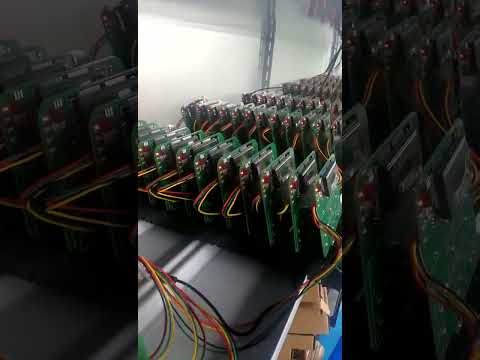
Video Demo: Production Clip
Cost Efficiency
Reduces TCO through unification.
Scenarios
Applicable in banks, factories, campuses.
Multi-Site Solutions
Standardization
Uniform architecture across sites.
Monitoring
Centralized for compliance.
Lifecycle
Lower costs over time.
Procurement Deep Dive
TCO Evaluation
Consider all factors.
Best Practices
Match to environment, verify certs.
Framework
Use matrix, engage manufacturer. User manual available here.
Conclusion with Recommendations
The AS-9000 is a solid choice. Visit Athenalarm for more.
Feature Comparison Table
| Feature | AS-9000 | Typical Small-Business Panel |
|---|---|---|
| Wired Zones | 16 (base) | 8-16 |
| Wireless Zones | 30 | 8-16 |
| Max Expansion | 1,656 | Limited (e.g., 64) |
| Communication | PSTN, 4G, TCP/IP | Often single-mode |
| Users | 11 | 4-8 |
| Event Log | 1,500 | 100-500 |
| Certifications | CCC, IEC 62368-1 | Varies |
This table highlights AS-9000’s superiority for enterprises based on specs.