Engineering Specification Guide: Evaluating Commercial Alarm Panel Manufacturers on Bus Line Topology, Multi-Path IP Protocols, and CMS Receiver Interoperability
Selecting a commercial alarm panel manufacturer is not primarily a hardware-price decision. It is an architecture, interoperability, and lifecycle decision.
A panel with more zones, a lower unit price, or a larger enclosure can still become the more expensive choice after deployment if its RS-485 bus is difficult to engineer, its communication path fails unpredictably, its reporting protocol is only partially implemented, or the CMS receiver interprets events differently from the panel.
Security Alarm Manufacturers vs. Security System Manufacturers: A Central-Station Interoperability Guide to Commercial Intrusion Panels and Distributor-Ready Deployment
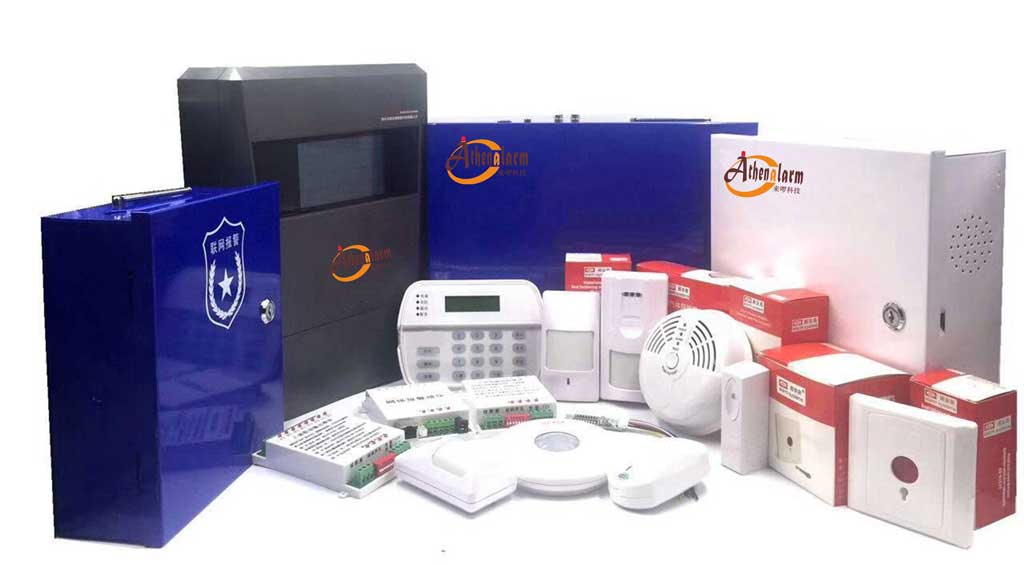
A commercial intrusion panel rarely fails because the enclosure is cheap or the zone count is low. It fails at the seams — between the communicator and the receiver, between the event code and the operator’s screen, between the failover claim on the datasheet and what actually happens when the primary path drops. For a distributor, importer, or systems integrator, the manufacturer that matters is the one that has engineered those seams, not just the panel.
Unified Telemetry Resilience Architecture (UTRA): A B2B Engineering Framework for Commercial Intrusion Panels, Multi-Path Signaling, and CMS Interoperability
In modern commercial security engineering, system reliability is no longer defined by whether an intrusion panel can “function under normal conditions.” The real question is far more uncomfortable: what happens when everything starts failing at once—silently, partially, and unpredictably?
Across large-scale deployments such as logistics hubs, financial institutions, and distributed retail infrastructure, alarm systems rarely fail in obvious ways. Instead, they degrade gradually. A panel may still appear online. Heartbeats may still be transmitted. IP sessions may still be established. Yet somewhere between the edge device and the Central Monitoring Station (CMS / ARC), the integrity of the telemetry chain quietly collapses.